About Us
Gypsum Masonry Unit (GMU) vs. Concrete Masonry Unit (CMU)
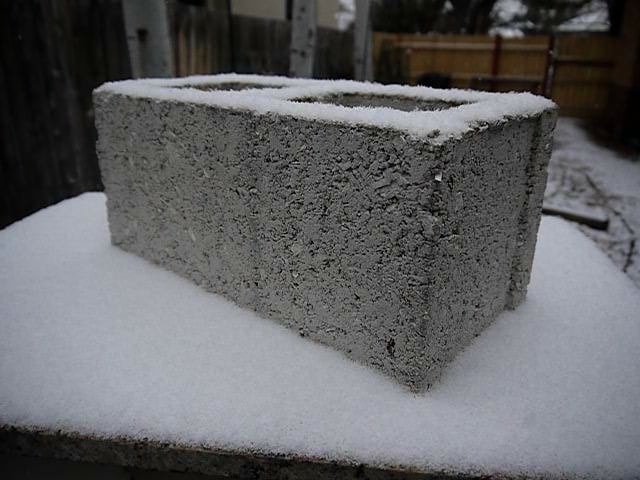
The Concrete Masonry Unit (CMU) has been the global standard for building blocks for over 100 years with a $3.6 billion market in the US. As it is concrete, it comprises 4 ingredients: sand, aggregate (gravel), Portland cement and water. WMX Systems proposes a low-carbon alternative to the CMU by repurposing construction drywall and plastic waste into building blocks called Gypsum Masonry Unit (GMU) which will significantly cut carbon emissions across the building industry. The proposed GMU has an estimated Global Warming Potential (GWP) score of about 100 while the CMU has a GWP of about 400 scored by Environmental Product Declarations (EPD) provided by CMU makers.
WMX Systems has determined, at lab scale, that GMUs can replicate CMUs to American Society for Testing Materials (ASTM) C55 standards for CMU compressive strength and water absorption using a) a much lower embodied carbon non-Portland cement b) substitute repurposed drywall for sand and c) substitute gravel aggregates with like sized hard plastic wastes (PVC, HDPE, others). GMUs present builders with a low embodied carbon alternative to CMUs, drastically reducing CO2 emissions. A range of Green Building Council, Leadership in Energy and Environmental Design (LEED) credits could be available to builders deploying GMUs in place of CMUs.
Contact Us
WMX Systems, Denver, CO, USA
Open today | 09:00 am – 05:00 pm |
Copyright © 2024 WMX Systems - All Rights Reserved.
Powered by GoDaddy
This website uses cookies.
We use cookies to analyze website traffic and optimize your website experience. By accepting our use of cookies, your data will be aggregated with all other user data.